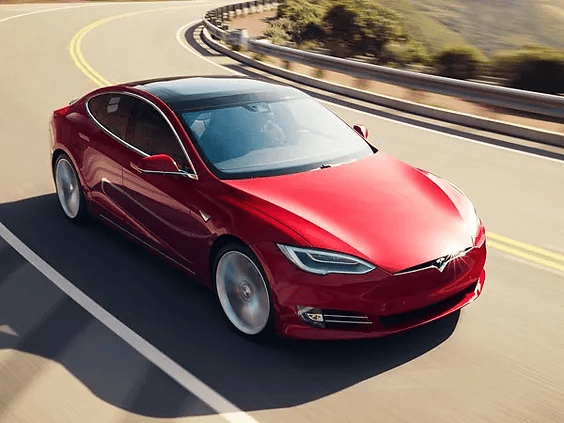
If there ever were a time to be hyped about electric cars, now would be that time. Car manufacturers like GMC, Volkswagen, Toyota, and many more are announcing to go fully electric by the 2030s. It’s fascinating to see how these big companies are committed to doing their part to put less CO2 into the air for the coming future. However, nothing is as environmentally good as it seems and while transitioning to electric cars is a step in the right direction, it is only a temporary solution to ending our fight against climate change.
Source: drivespark.com
The worst part about electric cars is the manufacturing process. Electric cars overall are cleaner than gas cars, but their manufacturing emissions surpass those of gas cars. According to the Union of Concerned Scientists, manufacturing an electric vehicle produces 68% more emissions than a gas-powered car. A large part of this increase in emissions is due to the extraction of rare-earth metals that are exclusive to the electric car. Transportation and equipment use for mining these metals are the primary culprit for the CO2 emissions. Also, many of the international companies who are in charge of mining these resources often do not abide by the environmental regulations of their host company. This constitutes a significant risk of toxic chemical exposure, given that extracting these metals requires an enormous amount. And if not disposed of properly, these chemicals could then get into groundwater or a nearby river or stream and can cause a variety of problems for the local ecosystem and community.
Speaking of cobalt and mining, cobalt is quickly becoming the new gold rush of the 21st century, thanks to the rise of the electric car. According to Statista, the Democratic Republic of the Congo has the largest reserve of cobalt in the world, approximately 3.5 million tonnes. The problem with having so much cobalt in the Congo is that it makes the Congolese people ripe for exploitation by foreign companies. This increased interest in the Congo means more regional conflicts between factions and a variety of human rights abuses, such as child labor (SP Global). Even with promises from the most prominent multinational mining companies like China Molybdenum and Glencore PLC, saying that they are adhering closely to maintaining the dignity of their Congolese workers, they have repeatedly come under renewed scrutiny by human rights organizations. “A 2016 investigation found children and adults in southern DRC working in hand-dug cobalt mines facing serious health risks, neither protected by the government nor respected by companies that profit from their labor” (Amnesty, 2019). And on the topic of producing cobalt, if the UK were to transition right now to all-electric vehicles, it would require twice the annual current production rate (Kelly, 2020). And that’s just the UK alone. That production rate is just not going to be feasible if we’re going to try to get the whole world to transition.

Source: infocongo.org
So what’s a better way forward when it comes to transportation? Public transportation! This idea especially applies to the U.S., where our infrastructure places the car as king. And as an American, it seems that transitioning to public transportation seems like a humungous task, which it is, but if you look across the globe to places like Europe, China, and Japan, it can be done. In Tokyo, Japan alone, 8 million people take the subway to work each day. Think of how much air pollution and carbon emissions have been prevented due to these 8 million people taking the subway. One person can save up to 20 pounds or 9 kilograms of CO2 each day by taking public transportation (remix.com, 2021). And that’s just with our current energy grids. If we were to transition to all renewables to provide electricity, we could even reduce our emissions by up to 52% (Our Changing Climate, 2022). And that’s just the tip of the spear when it comes to the benefits that public transportation provides. But there are also a variety of obstacles when it comes to implementing public transportation in U.S. cities, but that’s an article for another day.
To conclude, electric vehicles are a useful tool for helping to usher in the green revolution, but they are not a silver bullet. They come with various issues ranging from environmental to human rights, and the elevated interest in them is only going to make these issues worse. Our best way forward is to invest in public transportation, which can only seek to benefit everyone given how it has the word ‘public’ in it. The sooner we divert our attention from cars to public transportation, the better chance we can stop ourselves from reaching the 2 degrees Celsius point.
Sources
Amnesty challenges industry leaders to clean up their batteries. Amnesty International. (2021, August 17). Retrieved May 13, 2022, from https://www.amnesty.org/en/latest/news/2019/03/amnesty-challenges-industry-leaders-to-clean-up-their-batteries/
8 benefits of public transportation. Remix Blog. (n.d.). Retrieved May 13, 2022, from https://www.remix.com/blog/8-benefits-of-public-transportation
Cleaner cars from cradle to grave – ucsusa.org. (n.d.). Retrieved May 13, 2022, from https://www.ucsusa.org/sites/default/files/attach/2015/11/Cleaner-Cars-from-Cradle-to-Grave-full-report.pdf?_hsenc=p2ANqtz–Xe0-lZGDLNiKIcC9ER1IpwSOtm7jdmUydhKMC71NUZo3C2Pp3zobDlFxoJCSlS8hMIFCQ
Erickson, C. (2022, February 18). Cobalt miners seeking to expand in Congo face human rights accusations. S&P Global. Retrieved May 13, 2022, from https://www.spglobal.com/marketintelligence/en/news-insights/latest-news-headlines/cobalt-miners-seeking-to-expand-in-congo-face-human-rights-accusations-68726919
Garside, M. (2022, March 11). Global cobalt reserves by country 2021. Statista. Retrieved May 13, 2022, from https://www.statista.com/statistics/264930/global-cobalt-reserves/#:~:text=The%20Democratic%20Republic%20of%20the,world’s%20reserves%20of%20the%20metal.
Kelley, M. (2020, May 28). Electrifying the UK, and the want of engineering. The Heartland Institute. Retrieved May 13, 2022, from https://www.heartland.org/publications-resources/publications/electrifying-the-uk-and-the-want-of-engineering
Youtube. (2022, April 8). Why Electric Cars won’t save us – youtube. Why Electric Cars won’t save us . Retrieved May 13, 2022, from https://www.youtube.com/watch?v=vn9Vl0G53lA
 GenZ-Earther
Leave a comment