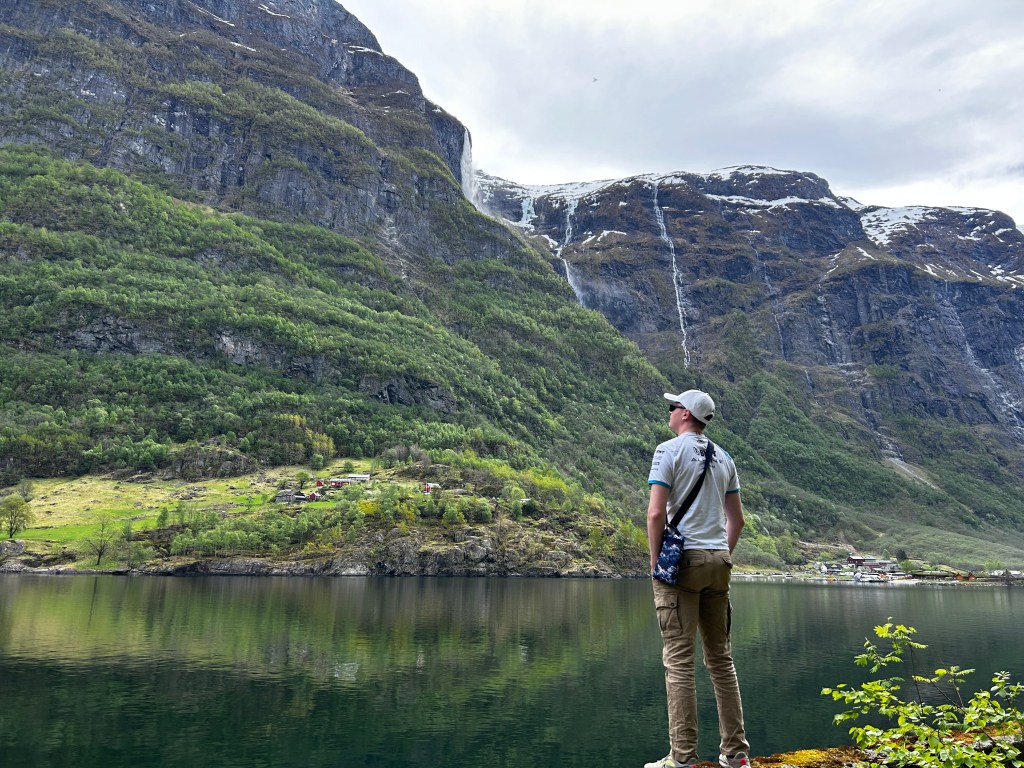
Photo of me in Norway. Source: Me
The concept and implementation of money has been around for well over 5,000 years, likely since the beginning of human civilization. It is the requirement to obtain any goods and services that you desire. This of course is a better alternative than bartering, rather than a specific item trade, such as food for clothing, you can trade money in exchange for anything. But not all goods and services are with the same amount of money, this is where value comes in, an Audi is worth more in value than a Toyota, meaning you need to have more money to buy an Audi than a Toyota. But what if something is beyond our comprehension of what value is, what if it is beyond our ability to put a dollar value on it? Going back to the example of an Audi vs a Toyota, an Audi is worth more because of a number of variables. Namely as a result of, the materials used to make it, the skill and craft of the people who designed it, and the overall look and feel of it. Most people would agree that an Audi, looks nicer than a Toyota, drives better than a Toyota, and overall indicates to an outside viewer that the person who owns the Audi is likely wealthier than someone who owns a Toyota. But, let’s put this way of thinking on nature, or more specifically an aspect or feature of nature. Take for example, a wetland. There is no brand or company/corporation that makes wetlands. There is no resource cost or human labor cost to make a wetland. Due to time, topography, and climate, the wetland was made for free in regards to monetary cost. So to destroy it, would be free, correct? No, in fact destroying it would cost you money. Not just in the short term in regards to immediate removal of the wetland, (say for example I hired an excavator team to completely dig out the wetland, that would cost money in an immediate sense), but also in the long term. If the wetland was connected to a nearby waterway, while also being next to an agricultural field that would occasionally have pesticides and fertilizers runoff from rainwater into the wetland, destroying THAT wetland would cost me in a number of ways. The water quality of that waterbody would decrease as there would be no wetland to filter that water from the nearby field. The biodiversity within the water body, such as aquatic fish species, would decrease in number. This would mean, I would catch less fish to sell from that waterbody, if I was a fisherman. These are just two benefits of many that wetlands provide to humans for free. These are what is known as ecosystem services in that the ecosystem of the wetland, the biotic (alive) and abiotic (non-living, physical) factors provide me a service, for free. But unfortunately, for many people, such as economists, people who are particularly known to analyze situations through a monetary cost-benefit analysis scope, don’t always see it that way. Or rather, they see the benefits of something that degrades or eliminates that ecosystem as a net benefit to all of us in whatever service it provides, namely job opportunities, investment, economic growth, all with the overall goal to make more money. They value money over nature.
To me, this is where the issue lies. It can be ok to put a dollar value on nature in some situations, for example, if there is a massive oil spill in the ocean, whoever created the spill should pay a certain amount, regarding the cost of damage to the ocean, to have it cleaned up. But there comes a certain point in time where you cannot put a dollar value on a piece of nature. Because while there can be times where a dollar value is necessary, as previously stated, more often than not it creates more harm than good to the environment. Especially now in the unfettered state of American capitalism that we’re currently experiencing, everything appears to be justified for the sake of economic growth. The phrase of “this will bring xyz number of jobs!” in defense of any accusations that a new building installation or mining operation will greatly harm the local environment is thrown around a lot by the stakeholders who seek to benefit monetarily, oftentimes with the addition of distance in regard to not having to worry about living near the area of interest once the damage has been done. And even the term ecosystem services has an, I would argue, unnecessary economic root to it. The natural environment doesn’t have to provide services for us for it to be ‘valuable’, just in the same way that bears do not have to understand simple math equations to be considered intelligent.
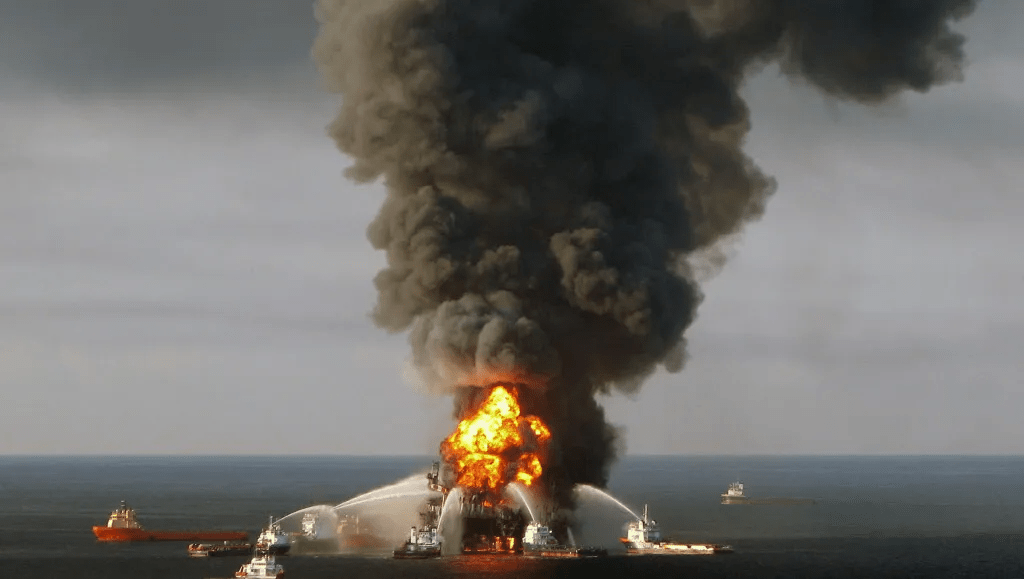
One example of where valuing nature can be effective was the deepwater horizon spill of 2010. Source USA TODAY
If I wanted to write about my critique of capitalism or the so-called benefits of economic growth, I think this blog post that I am writing right now, would be an entire dissertation. So, instead I want to bring forth an idea that I want to be passed around more often. There needs to be a cultural/societal reframing of how we place value on something, particularly nature. Not to categorize too broadly, the beliefs of all 574 indigenous tribes, but many indigenous communities see and perceive the land they inhabit as valuable, without a monetary focus. Using a combination of religious, ecological, historical, and cultural factors, they bring a sense of value and worth into the land that surrounds them, providing them satisfaction beyond monetary pleasure. Not to mention in a much more long standing manner. To emphasize what I mean by this, let’s take a mountain as an example. Let’s say the mountain holds a certain amount of monetary value due to the resources that it holds within it. If that mountain is blasted open and exploited for its riches, the profits that a mining company could reap from that would only create a limited duration of pleasure for the owners before moving on to the next mountain, and the next mountain, and so on. But imagine that mountain is a key historical site for a nearby indigenous tribe. The “existence value”, to use economic terms, that it provides that indigenous tribe, meaning the satisfaction that the tribe gets from it just existing even if they hypothetically never visit it, would arguably be more beneficial than having it mined. Now, it may be a tall order to ask our current society to adopt a more indigenous way of thinking in regards to how we view nature, but I believe there is a mentality of thinking that we can adopt to spark a change in our perspective.
Recently, six women took a short 11-minute suborbital trip to space through Blue Origin’s new Shepard rocket. The event was quite popular in the news due in part to the famous singer, Katy Perry, being aboard the trip. Her reaction and amazement of the entire trip, sparked a lot of online reactions, both negative and positive, but regardless demonstrated her experience with the ‘overview effect’. Which is the cognitive shift that many astronauts experience when seeing the earth from a distance. It’s been described as a state of awe and wonder of our earth and an over encompassing feeling of how fragile our Earth is. However, I would argue that you do not need to go up on a $11 million dollar ticket trip to suborbit to get this feeling, there are many things you can do on Earth instead. Take for example, the book Pale Blue Dot by Carl Sagan, helped inspire millions of readers with a similar effect of awe on how small and fragile our Earth is when compared to space. I believe that an educational shift on how we learn about space within our school system as well as working with the space-oriented institutions and government agencies like NASA to boost their engagement with the public, could result in a more introspective view on our planet. To leave one last example of the power of realizing space, if you will, there’s a YouTube channel called, To Scale: where they brought out a portable telescope to downtown Los Angeles and let people observe the moon. The reactions were either a “oh my god!” to a “wow!” but despite that, each person was equal in their amazement of just how beautiful the moon is. When watching the video, you can tell that their reaction to the moon is something they will remember for the rest of their life. Sometimes to appreciate what we have here on Earth, we must look up to the stars.
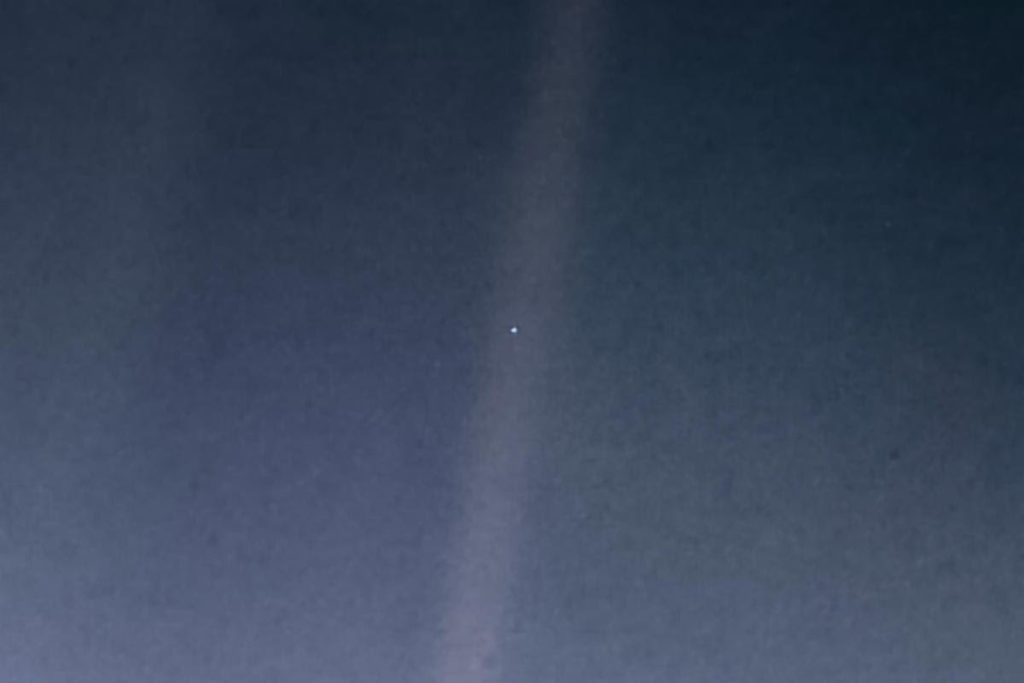
Pale Blue Dot. Source: Lowell Observatory
Sources:
“Ecosystem Services.” USDA Climate Hubs, U.S. Department of Agriculture, https://www.climatehubs.usda.gov/ecosystem-services. Accessed 20 Apr. 2025.
Extra Credits. “The History of Money.” YouTube, 1 Dec. 2015, https://www.youtube.com/watch?v=XCrJ3NflOpE.
“The History of Money: Bartering to Banknotes to Bitcoin.” Investopedia, 17 Apr. 2007, https://www.investopedia.com/articles/07/roots_of_money.asp
“The History of Money: Bartering to Banknotes to Bitcoin.” Investopedia, 17 Apr. 2007, https://www.investopedia.com/articles/07/roots_of_money.asp
 GenZ-Earther
Leave a comment